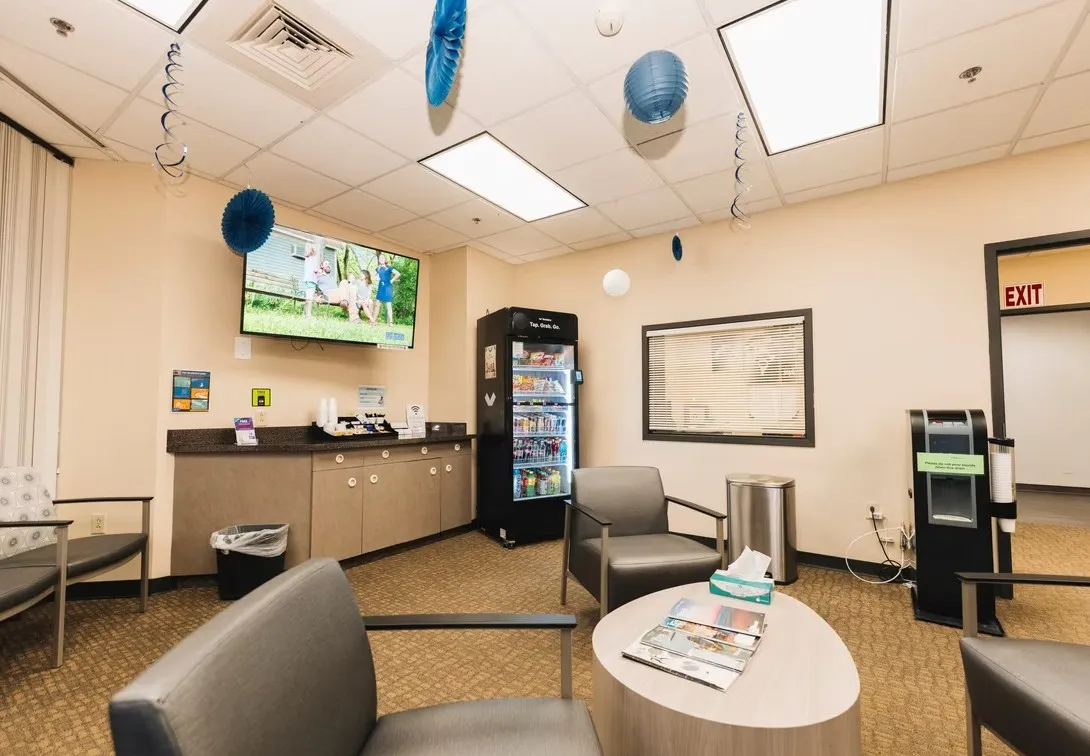
Medical offices are easy to overlook as a place for vending, and they are one of the better fits. Patients wait longer than anyone planned, family members sit through appointments, and clinical staff work shifts with short, unpredictable breaks. All of them tend to be people who cannot easily step out for a drink.
This guide covers how to think about vending for a San Diego practice, clinic, or outpatient facility, from who the machine serves to where it should go.
Why stepping out is harder here
Waiting in a medical office is unpredictable everywhere. A specialist running forty minutes behind is ordinary, and the patient in the chair usually cannot leave without risking their place in line.
San Diego adds a layer to that. Many practices in Hillcrest, La Jolla, Kearny Mesa, and the county’s other medical corridors sit inside medical office buildings with structured parking. Leaving to find a store means walking back to the garage, driving out, finding somewhere to park, and paying again on the way back in. Very few people do it, so they sit there thirsty instead.
The same logic applies to staff. A medical assistant with a fifteen-minute break is not going to spend it in a parking garage.
Two audiences, two sets of needs
A good medical setup starts by recognizing that patients and staff want different things.
Patients and families want a narrow set of items done well: water for someone who has been waiting a while, a snack for a parent with a restless child, coffee for a family member on a long day. Fasting patients coming out of a blood draw need something quick, which is why juice and crackers belong in any practice that does regular lab work.
Staff want something closer to an office break room: more caffeine, more substantial food, and enough variety that a twelve-hour shift does not mean eating the same granola bar three times.
Smaller practices usually serve both groups from one machine. Larger practices often run two: a patient-facing machine in or near the waiting area and a staff-only machine in a break room or back corridor, each stocked for its audience.
What to stock in a medical setting
A medical machine should look noticeably different from the one in an office lobby.
- Water and low-sugar drinks take up most of the cold space. In San Diego’s climate, cold drinks lead the mix year round.
- Sugar-free and diabetic-friendly items should be standard, not a special request.
- Juice and simple carbohydrates for practices that see fasting patients.
- Gluten-free and lower-sodium options where the patient population calls for them.
- Fewer of the items a clinic would rather not sell. Many practices skip candy and energy drinks in the patient-facing machine. That should be your call, and a good provider will build the list around it.
You should be able to review the product list before anything is installed and change it later. Our healthy vending guide for San Diego workplaces goes deeper on building a better-for-you mix that still gets used.
Thinking about vending for your practice? A free location review covers placement, a patient and staff product mix, and whether your practice qualifies for no-cost placement.
Get a free vending machine →Where the machine should go
Placement in a medical office has more constraints than in most settings. A few principles help:
- Visible but out of the way. Patients should see the machine from their seat without it blocking the check-in desk, a doorway, or a wheelchair path.
- Quiet. Modern machines run quietly, but it is still worth keeping one away from exam rooms and consultation spaces.
- Near power, away from clinical areas. A standard outlet is all a machine needs. It should sit in public or staff space, never inside a clinical area.
- Separate staff placement where possible. A staff machine in a break room keeps clinicians from having to cross the waiting room in scrubs between patients.
Shared medical office buildings
Many San Diego practices share a floor or a building with other practices. In a multi-tenant medical office building, one machine in the shared lobby can serve every practice on the floor. That often makes more sense than each practice putting a machine in its own small waiting room.
These buildings usually have their own access rules, and building management will often ask for a certificate of insurance before anything is installed. The vending provider should handle that directly with building management rather than passing it to your practice manager.
Why connected, cashless machines suit healthcare
Healthcare settings benefit from the features that make modern vending easier everywhere:
- Cashless payment means no handling coins in a clinical environment and no cash box for anyone to manage.
- Remote monitoring means the machine is restocked before it runs out, without anyone at the front desk keeping track.
- A provider contact number on the machine means refund requests and service issues go to the vending company, not your receptionist.
The goal is a machine your team never has to think about.
Getting started
For most qualifying San Diego practices, a machine is placed, stocked, and serviced at no cost to the practice. The provider owns the equipment and earns from what sells. What decides fit is mainly patient volume, typical wait times, staff size, and whether the waiting area has a sensible spot near an outlet.
For details on the practices we serve across the county, see medical office vending machines in San Diego. For machine formats and product mixes in general, see our guide to medical office vending machines.
If you would like to explore it for your practice, request a free location review. We will look at your waiting area, your patient and staff mix, and the right setup, and tell you honestly whether it makes sense.